College of Criminal Justice Online Bachelor's Program
As part of my role at SHSU Online, I led the instructional design and delivery of a large-scale Criminal Justice Digital BA Program—25+ fully online courses developed across fall and spring terms. Built end-to-end with scalable templates, consistent QA, and authentic assessments, the program provided a high-quality, accessible pathway to a Criminal Justice degree, ensuring academic rigor while meeting accreditation, accessibility, and the needs of a diverse online learner population.
Criminal Justice Online Bachelor’s Program: A five-week courses, open educational resources, and interactive learning delivered directly through Blackboard Ultra
Role
Senior LXD & Project Lead
Client
Institute of Homeland Security
Tech
Blackboard Ultra LMS
Timeline
Feb. 2022 – May 2023
01. The Challenge
When I joined the project, the program was at a critical juncture: 26 courses needed to be rapidly developed for online delivery (13 for fall and 13 for spring semesters) but timelines were tight and materials were inconsistent. Faculty contributors had been contracted to provide only limited deliverables, primarily reading lists and quiz questions. Additionally, existing materials varied in depth and format, and faculty availability was constrained by other academic commitments.
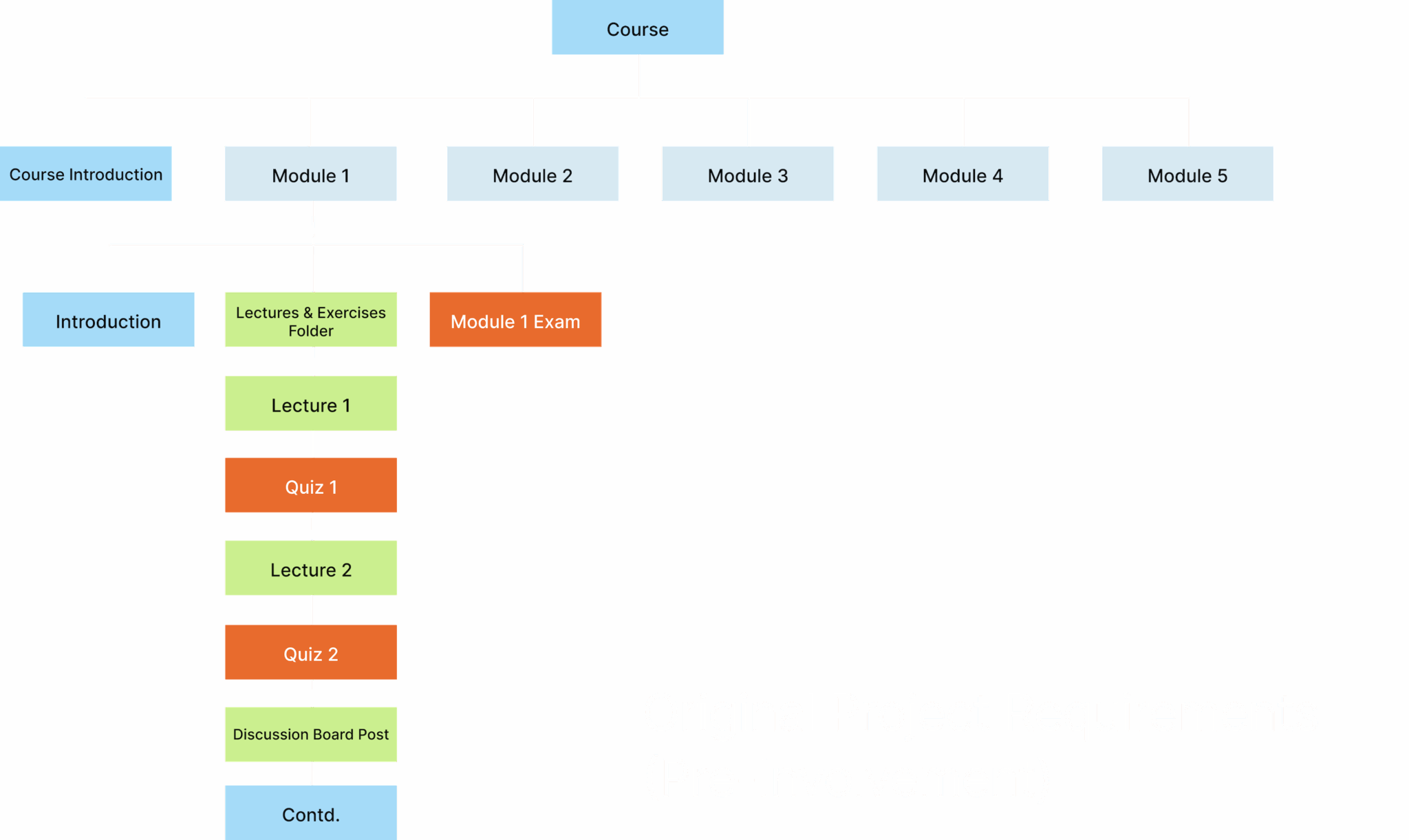
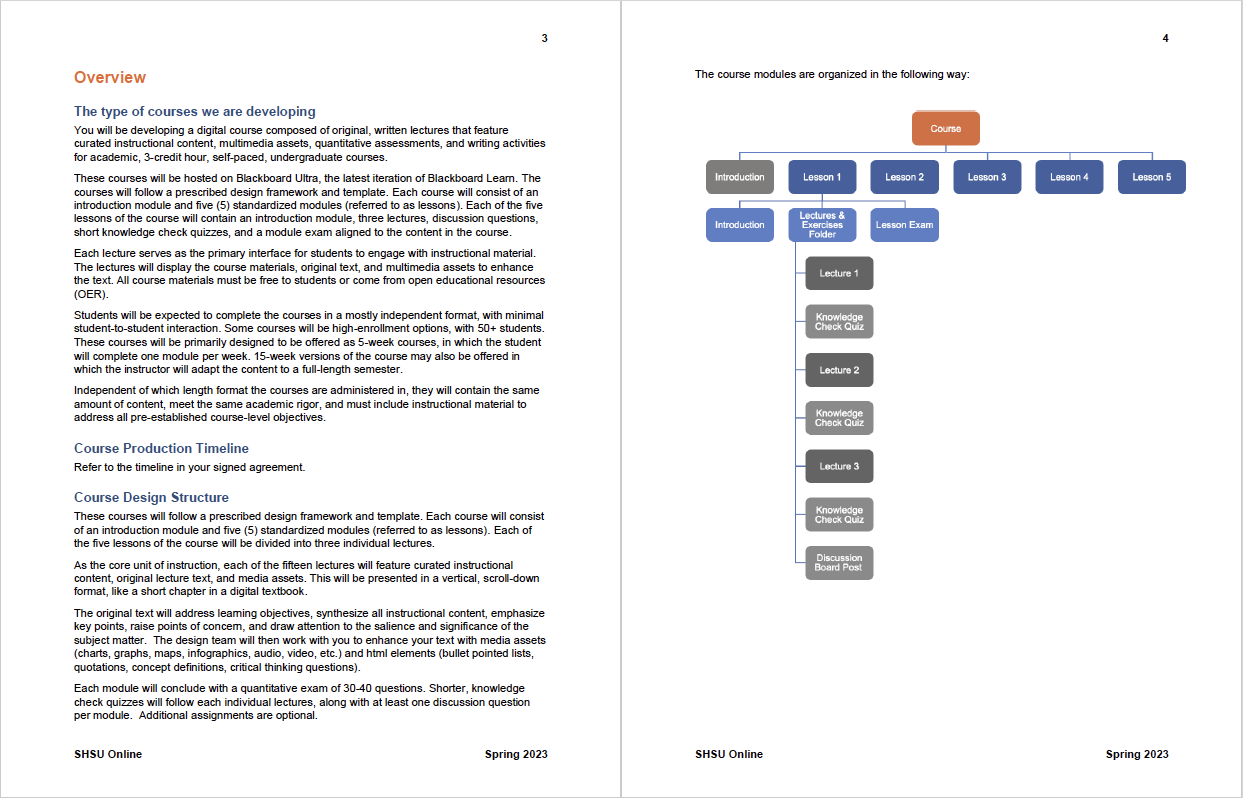
The only instructional framework in place was a basic blueprint — five modules per course, each with three short lectures built from free or open educational resources, followed by auto-graded knowledge checks. Beyond that minimal structure, activities and discussions were optional, with little guidance on engagement strategies for large, MOOC-style classes of 50+ students.
The central challenge was to transform this uneven foundation into multimedia-rich, accessible courses that could launch on schedule while maintaining academic rigor and supporting meaningful student learning.
1.
Courses will be designed for a 5-week format, implemented on Blackboard Ultra LMS, intended for section sizes of 50+ students with limited student-to-student interactivity
2.
All course materials must be free to students, ie. Open Educational Resources (OER); courses will also feature “premium” video content produced in-house
3.
Auto-graded "knowledge check" quizzes must follow every lecture, while additional activities and discussion board posts are encouraged
02. Design
In the design phase, I established the pedagogical and structural framework that would guide all 26 courses. Working with subject matter experts, I defined learning objectives, assessment strategies, and engagement approaches suited to large online cohorts. We determined how to scaffold complex criminal justice concepts through layered activities—moving from foundational readings and lectures to applied case studies, discussions, and assessments.
A major design decision was anchoring each course in real-world relevance. I guided SMEs to integrate current events, professional anecdotes, and media examples that would resonate with working adults and career-focused students. We also designed for accessibility and cognitive load management, determining where to use visual aids, interactive elements, and chunked content to support diverse learners.
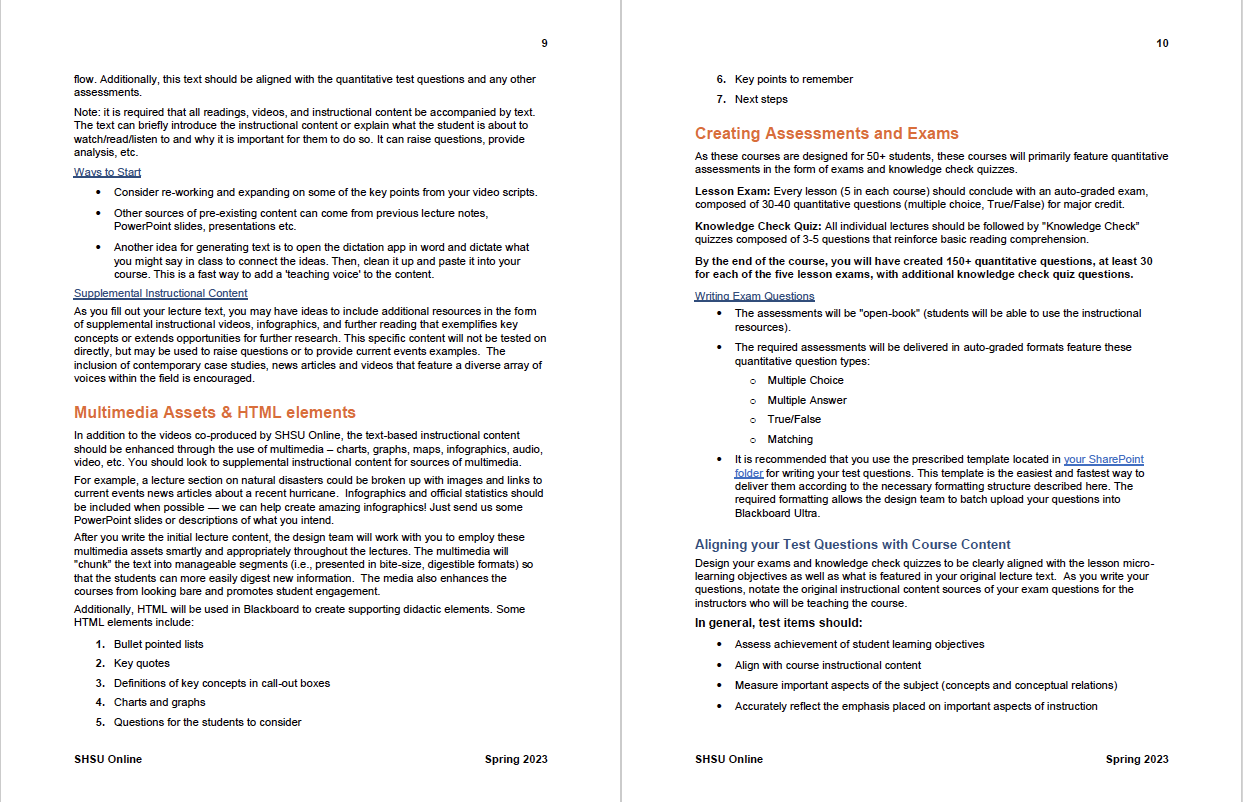
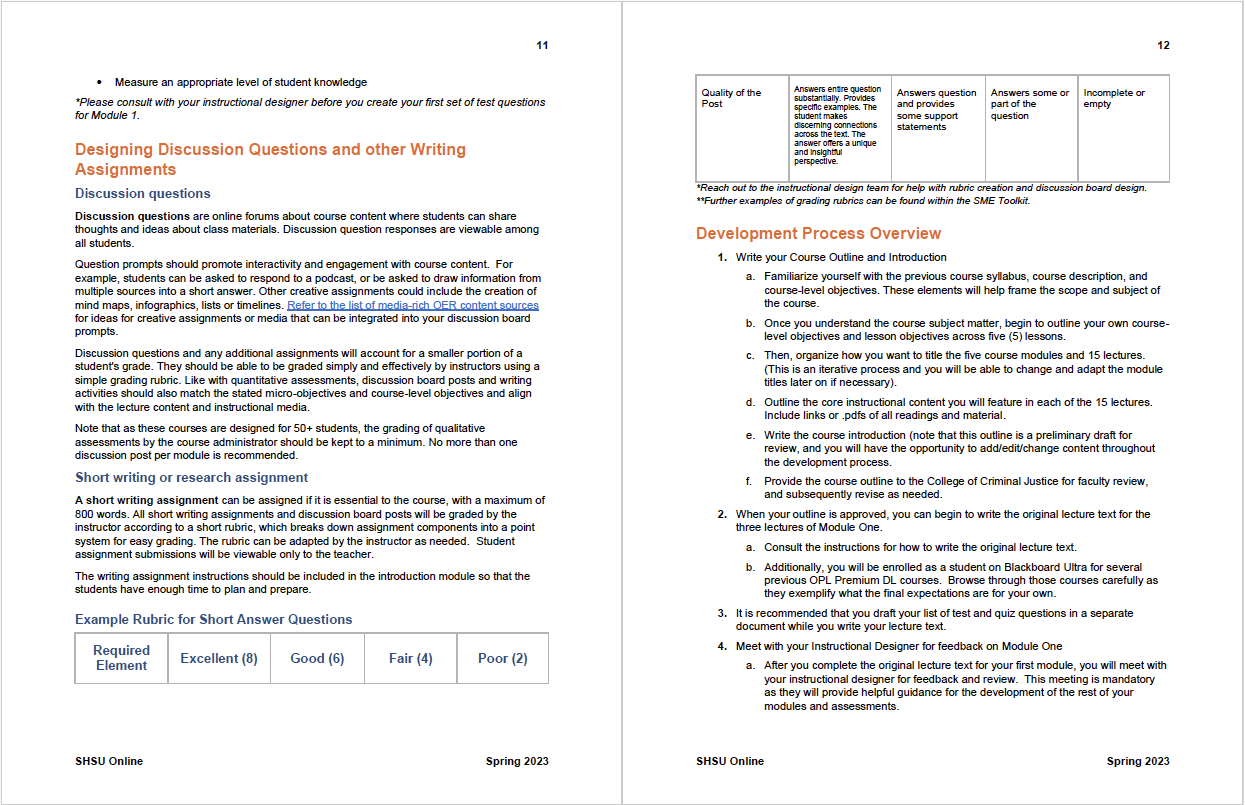
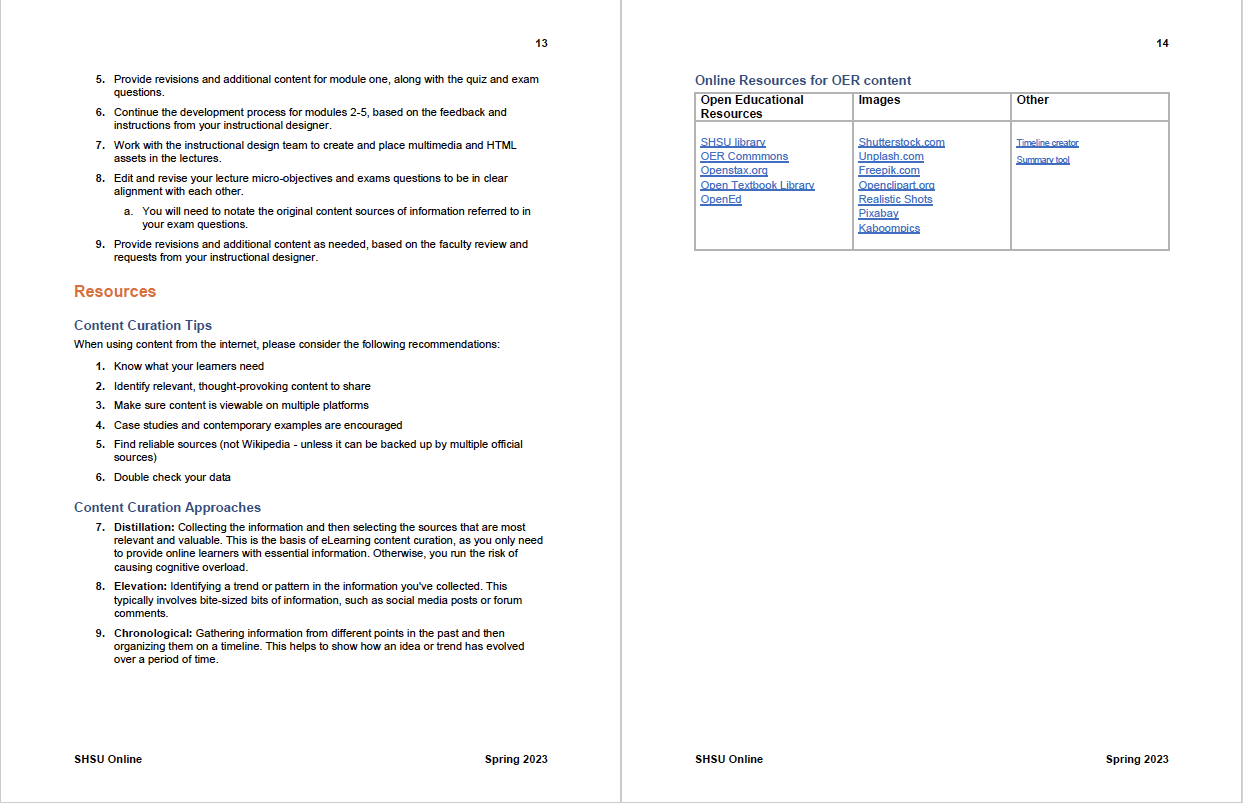
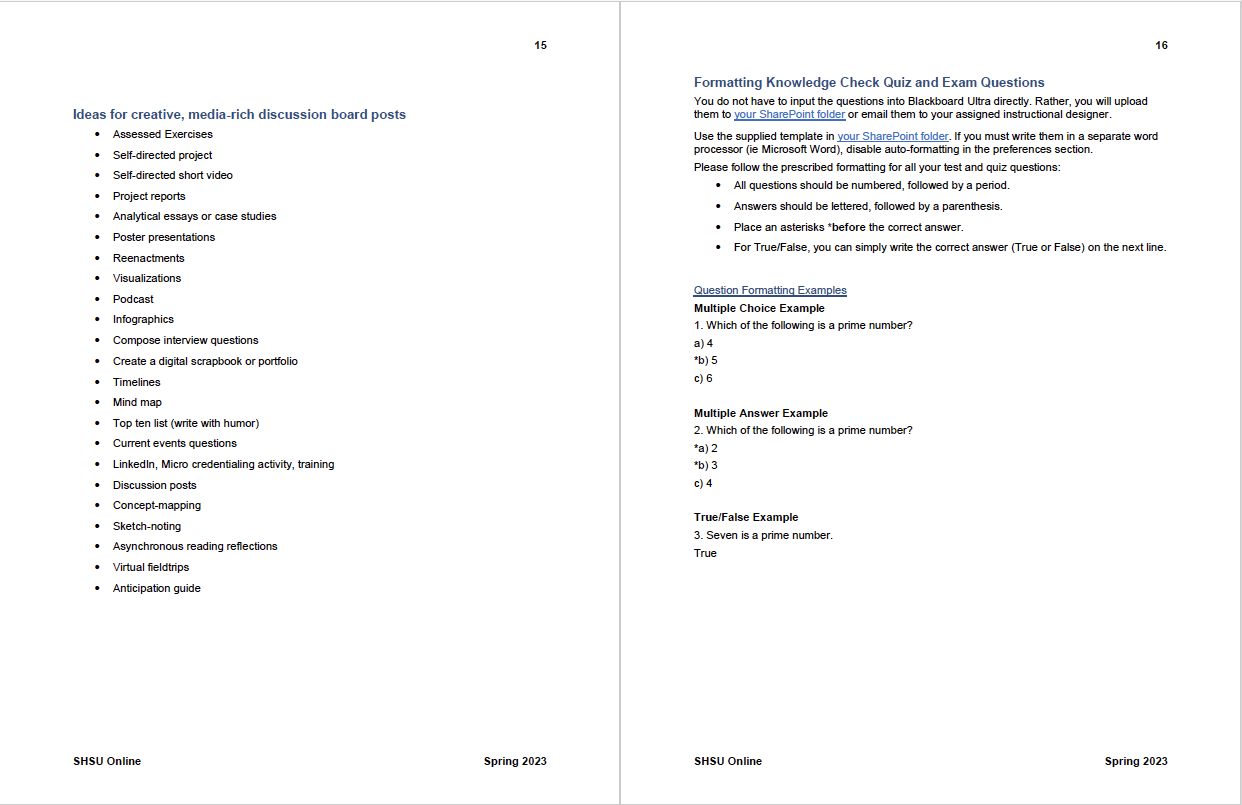
From an architectural perspective, I created a standardized course blueprint: five modules per course, each containing a consistent sequence of lectures, readings, activities, and assessments. To ensure brand cohesion and usability, I developed a comprehensive style guide that defined visual standards, navigation patterns, and formatting conventions across the entire program. These design decisions created a scalable, replicable framework that balanced academic rigor with student-centered learning.
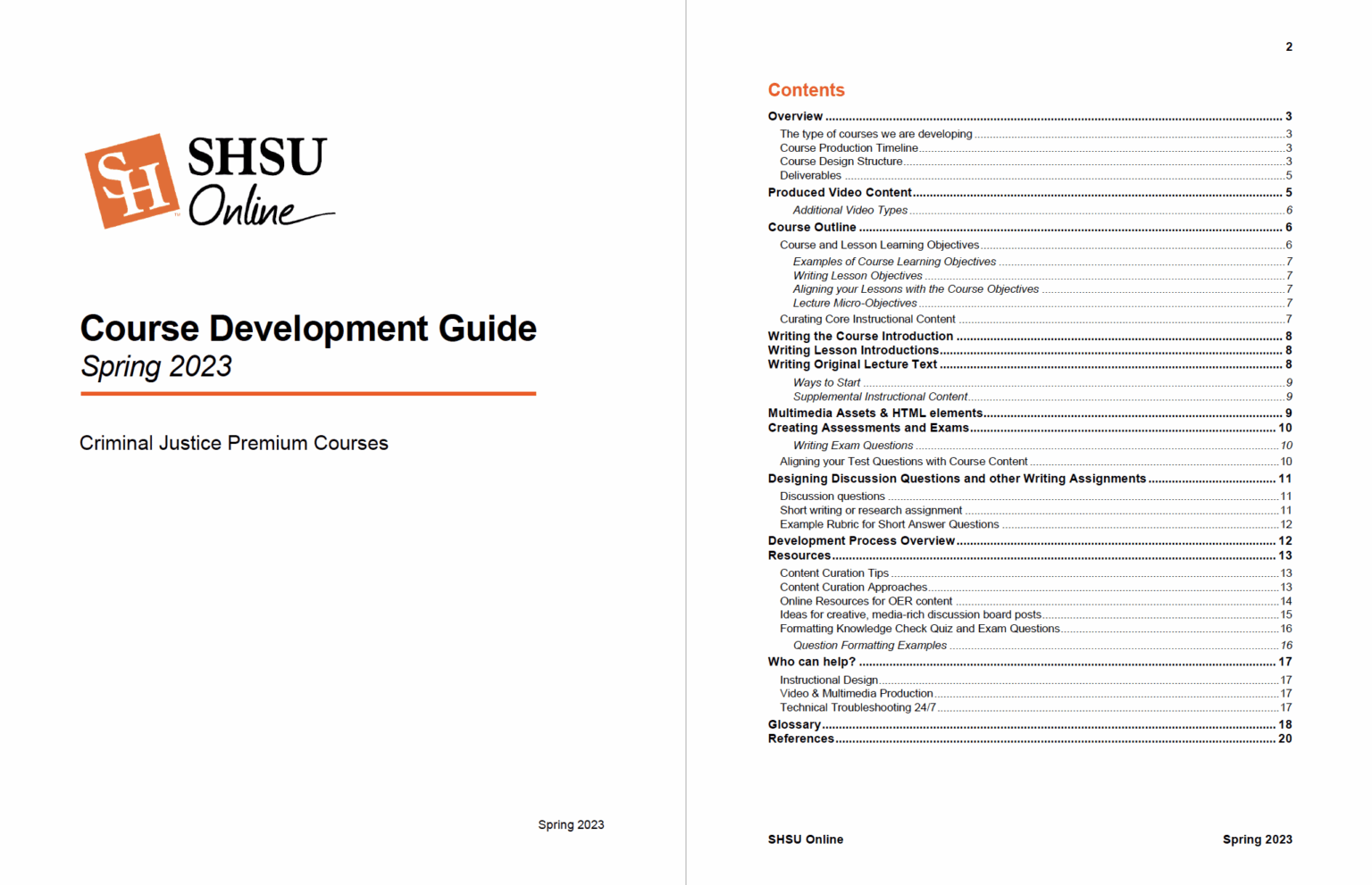
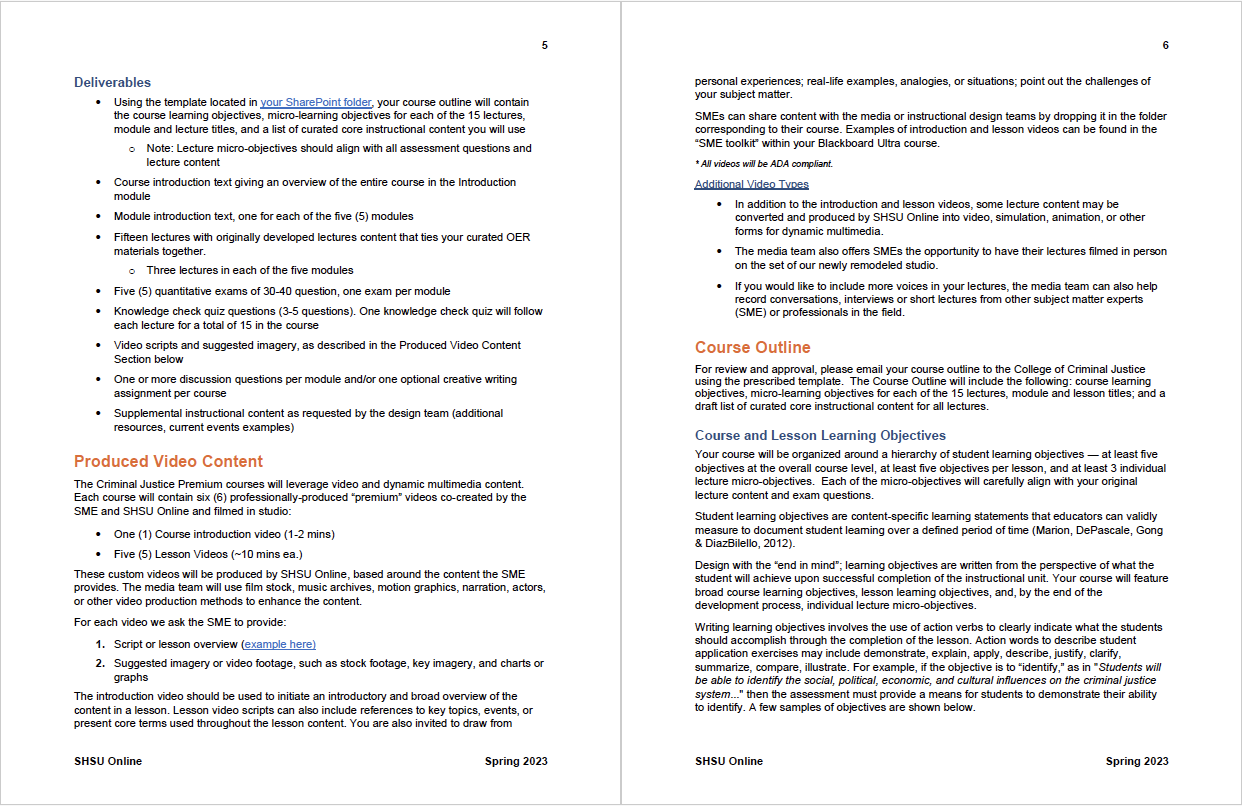
Excerpt from Authored Development Guide
03. Development
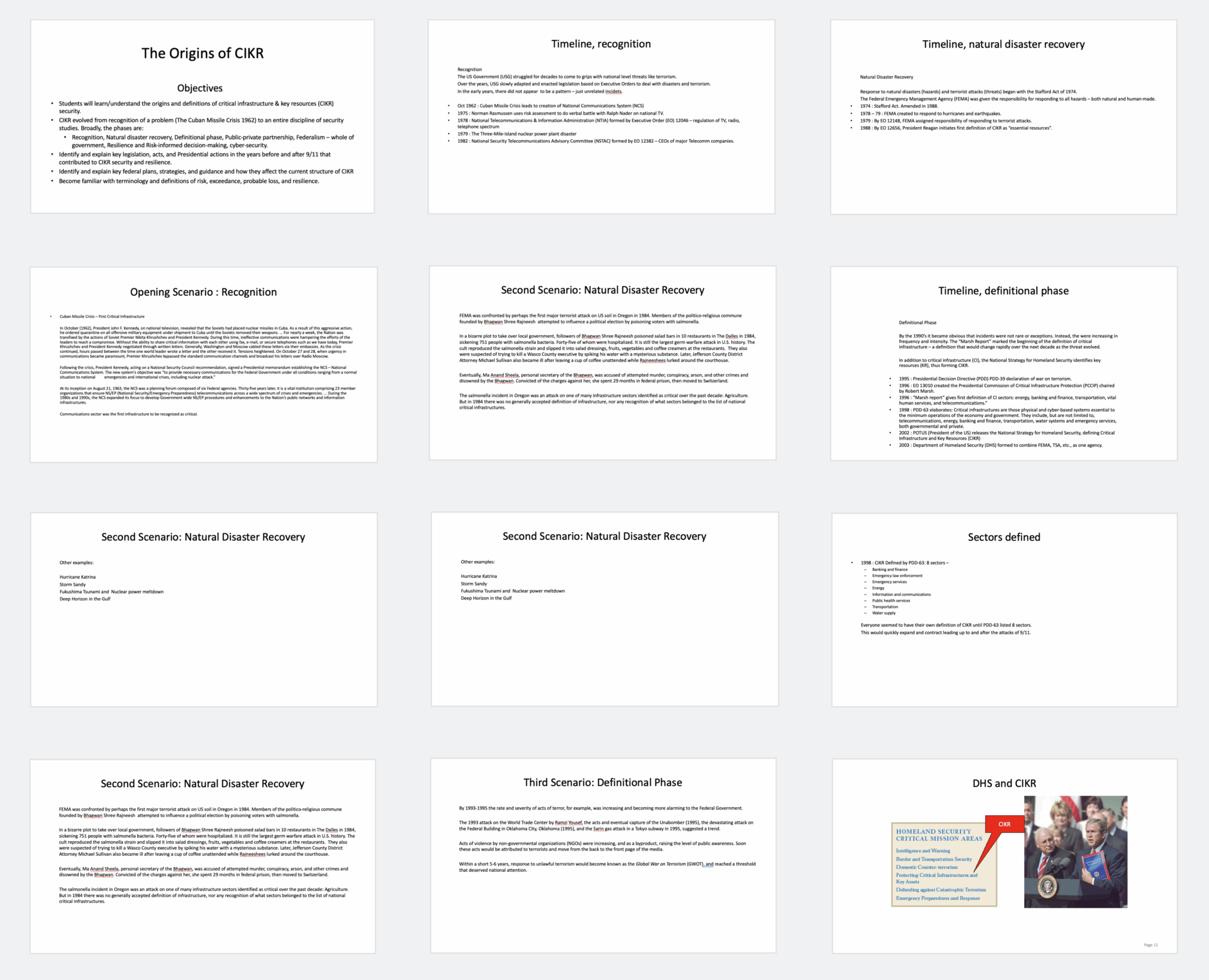
In the development phase, I managed a team of instructional designers and coordinated production workflows across multiple SME contributors. The core work involved transforming faculty materials—often delivered as PowerPoint slides, reading lists, and quiz banks—into polished, multimedia-rich course modules within Blackboard Ultra.
Our team worked iteratively with SMEs, converting slides into structured HTML content, then returning drafts for faculty review and enhancement. We embedded visual scaffolding throughout: call-out boxes to highlight key concepts, diagrams to illustrate processes, and formatted lists to break up dense text. To maximize Blackboard Ultra’s capabilities, we used inline HTML for consistent styling, interactive features, and accessibility compliance.
Meanwhile, our media team produced professional course introduction videos and module overviews, giving each course a cohesive visual identity and instructor presence. We also reformatted assessment question banks for batch upload, streamlining the testing infrastructure.
Throughout production, I maintained version control, tracked progress against deadlines, and facilitated ongoing communication between designers, SMEs, and the media team. The result was 26 courses that functioned like interactive digital textbooks—blending faculty expertise with design-driven scaffolding and technical polish.
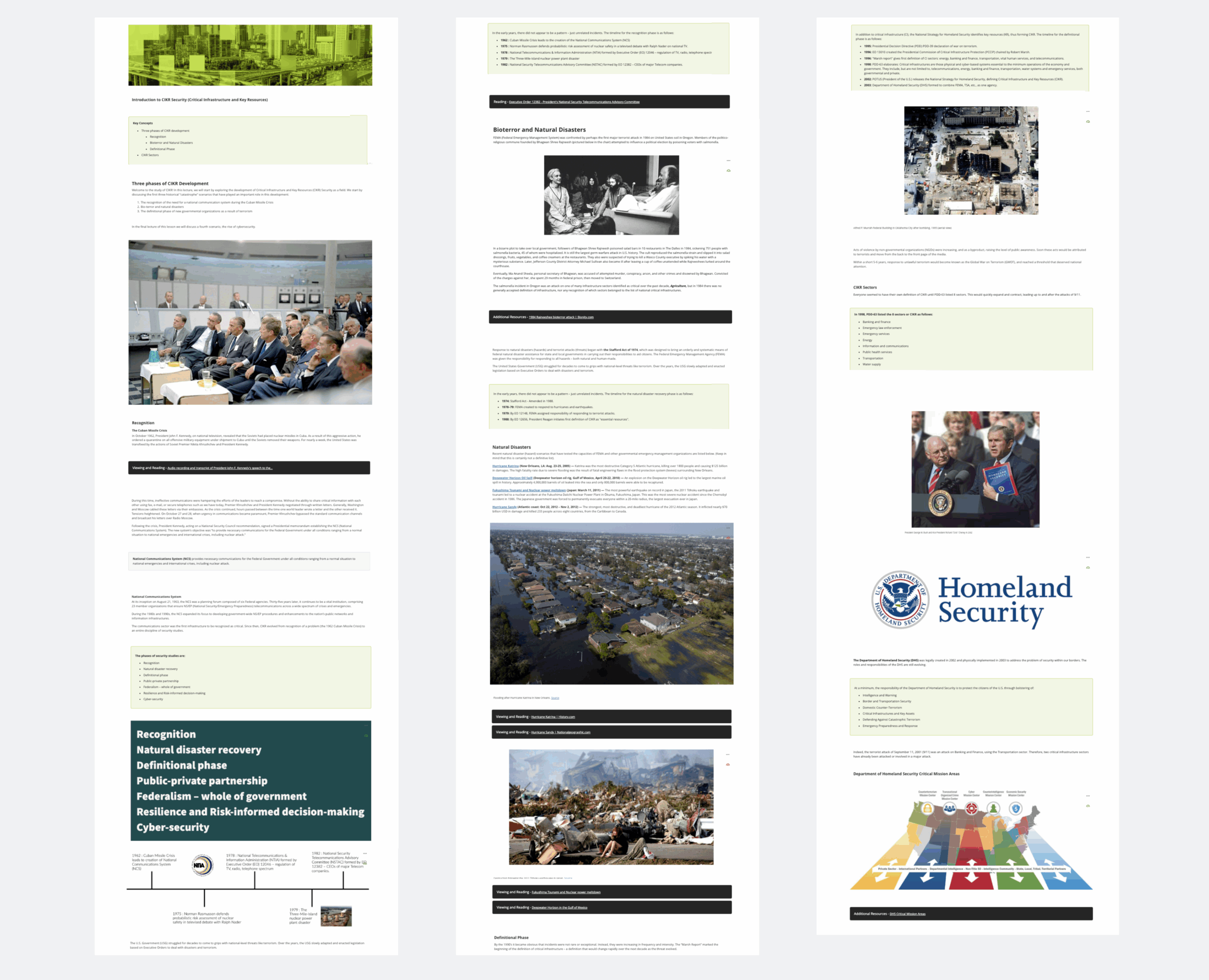
Redesigning for Impact
Before / After of “Critical Infrastructure and Key Resources” Lesson
04. Iteration
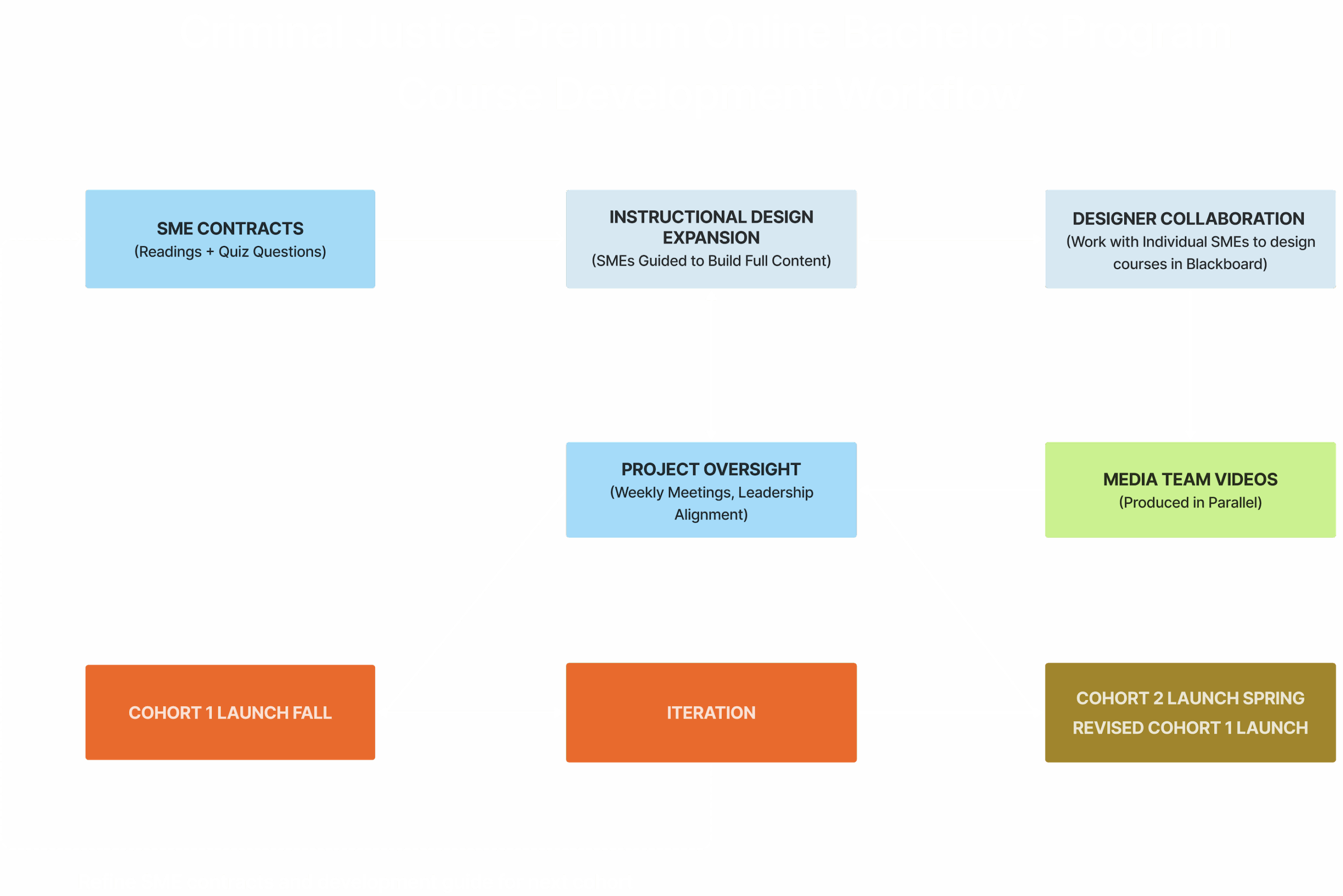
Building on the launch of Cohort 1, I established program governance through shared blueprints, standardized course shell templates, and assessment libraries, which enabled a smooth rollout of 13 courses. Guided by ADDIE principles, I led change management with weekly status updates, risk tracking, and faculty enablement workshops. For Cohorts 2 and 3, I strengthened the process by revising SME contracts, creating a formal feedback mechanism for instructors, and designing a clear system for implementing and documenting changes. These iterative improvements not only enhanced course quality and faculty experience, but also ensured the program was sustainable and ready for continued development under the operations team.
05. Adaptation
Following the successful launch of the online BA program, I led the adaptation of course content into streamlined training bundles for the Institute of Homeland Security—a professional development client with strict time constraints and workforce-specific learning needs. Unlike the semester-based academic model, these courses needed to function as standalone, just-in-time training modules that government employees could complete within defined timeframes.
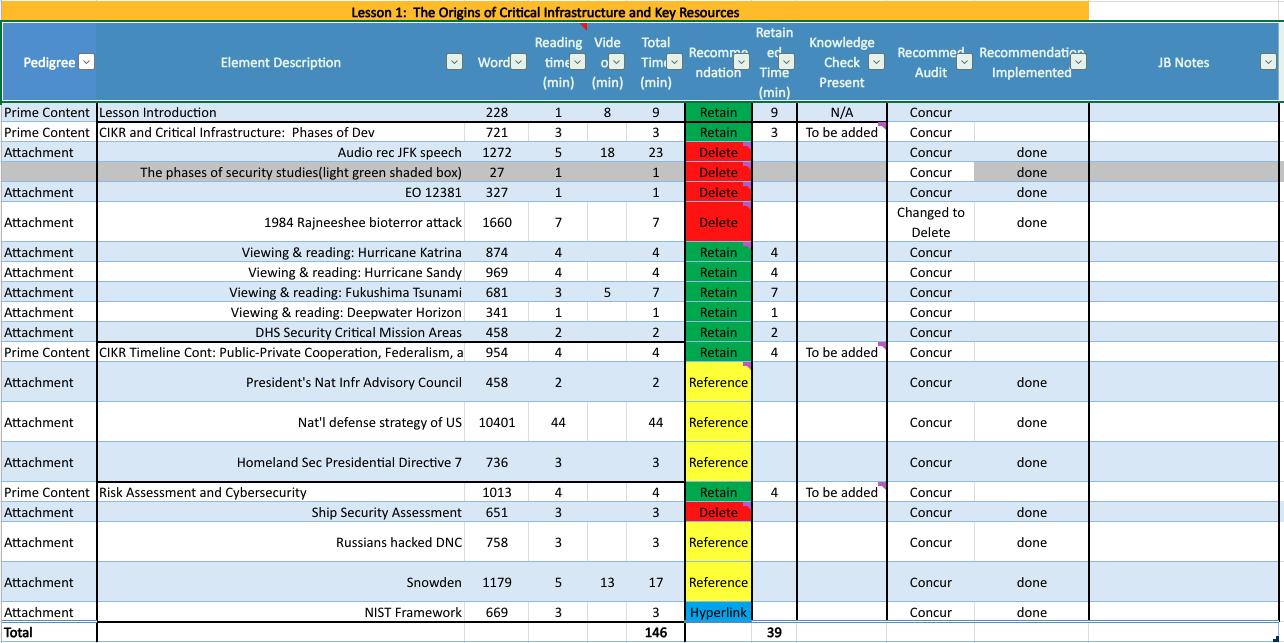
Working closely with the client, I conducted a comprehensive content audit across all 26 courses, identifying the most relevant materials for homeland security professionals. We carefully aggregated lectures, readings, and assessments, then mapped each bundle to ensure it aligned with the client’s specified hour allocations per course. This required balancing academic rigor with professional applicability—prioritizing case studies, policy analysis, and operational scenarios over theoretical foundations.
To maintain quality control and transparency, we created detailed content inventories with time estimates for each module component [screenshots of these planning documents are shown below]. This systematic approach allowed us to deliver cohesive, career-relevant training packages that met contractual requirements while preserving the academic integrity of the original curriculum. The project demonstrated how thoughtfully designed academic content could be successfully repurposed for commercial training markets.
Detailed content inventory with time calculations and curation decisions (Keep/Adapt/Move/Delete) used to align academic course materials with client-specified training timeframes